






Last updated on November 16th, 2025 at 06:22 pm
If you’ve received an IRS notice about unresolved tax delinquency, your situation can escalate quickly. What begins as a few missed payments can turn into seriously delinquent tax debt, exposing you to liens, levies, and wage garnishments. Unresolved or delinquent taxes aren’t just a financial burden — they’re a legal issue that demands swift action.
The most effective way to protect your income and assets is to settle back taxes through established IRS programs, such as an Offer in Compromise, an Installment Agreement, or a Currently Not Collectible status (if you qualify).
What Are Delinquent Taxes?
Delinquent taxes are unpaid federal or state taxes that remain outstanding after the payment deadline. Once the IRS sends a bill and the due date passes without full payment, the balance becomes tax delinquent. This can include income, payroll, or self-employment taxes.
When taxes go unpaid, the IRS issues a series of notices — starting with a CP14 Notice — to alert you of the balance due. If the debt remains unresolved, the IRS can take collection actions such as filing a Notice of Federal Tax Lien (NFTL) or enforcing a levy on your wages, bank accounts, or property. In short, delinquent taxes grow more costly over time and can quickly lead to serious enforcement measures if not addressed.
Key Takeaways
- Unresolved tax delinquency refers to unpaid taxes remaining after the IRS has issued notices.
- Ignoring the issue can escalate to seriously delinquent tax debt, liens, levies, or even passport restrictions.
- You can settle back taxes through IRS resolution programs such as Offers in Compromise or Installment Agreements.
- Taking action quickly or consulting a tax attorney can stop enforcement actions and protect your assets.
Types of Delinquent Taxes
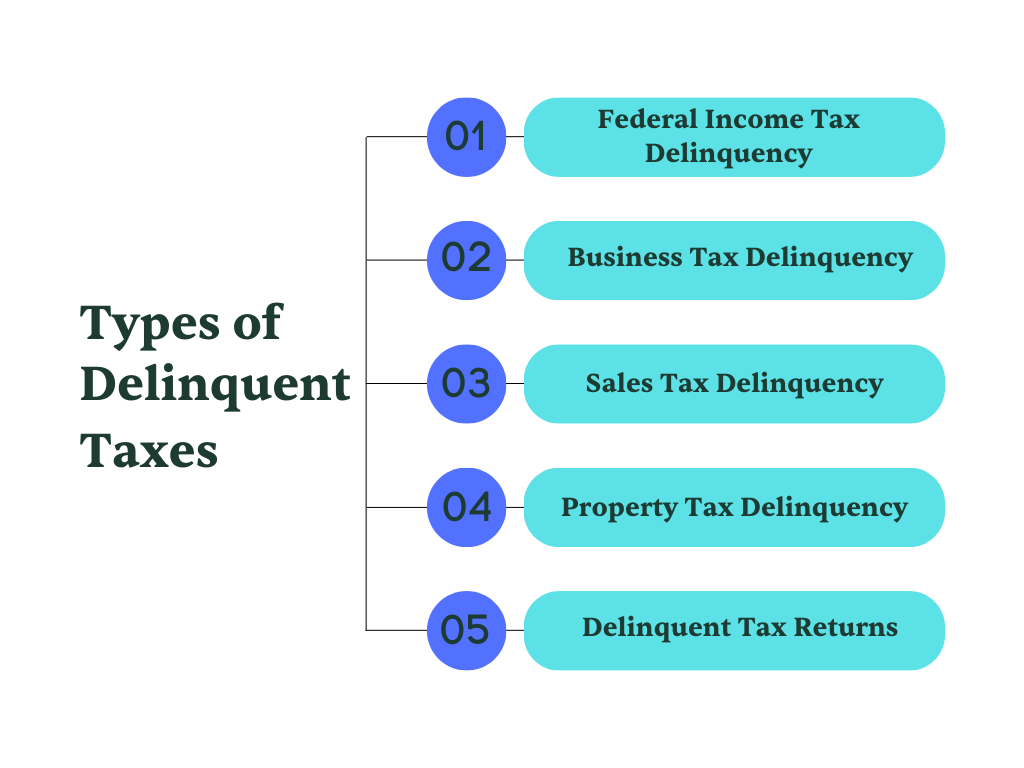
Delinquent taxes can take several forms, depending on the type of unpaid liability. The most common categories include:
Federal Income Tax Delinquency
Business Tax Delinquency
Sales Tax Delinquency
Delinquent Tax Returns
When a taxpayer fails to file a required return, the IRS may prepare a Substitute for Return (SFR) using available income data. This often results in a higher tax assessment since deductions and credits are not included.
What Causes Tax Delinquency?
Several factors can lead to unresolved tax delinquency, ranging from simple filing mistakes to serious financial or compliance issues. Common causes include:
Failure to File a Tax Return
When taxpayers don’t submit a required return, the IRS may file a Substitute for Return (SFR) on their behalf — often resulting in a higher balance due.
Can you go to jail for not filing a tax return? Read here
Missed Payment Deadlines
Even if a return is filed, failing to pay the amount owed on time causes the balance to become tax delinquent.
Underreported or Unreported Income
Missing or misreporting income from wages, contract work, or investments leads to additional taxes once the IRS reconciles reported income through Form W-2s and 1099s.
Improper Deductions or Credits
Claiming deductions or credits that don’t apply (or miscalculating them) can trigger tax adjustments and new liabilities.
Unpaid Business or Payroll Taxes
Business owners who fail to remit trust fund (payroll) taxes are held personally liable. The IRS considers this one of the most serious forms of delinquency.
Audit Adjustments
If an IRS audit determines that additional taxes are owed, failure to pay the assessed balance results in delinquency.
Financial Hardship
Job loss, medical expenses, or other personal crises can prevent taxpayers from paying on time, allowing balances to grow with penalties and interest.
How to Settle Delinquent Taxes with the IRS
The IRS offers several options for taxpayers to settle their unpaid taxes. Understanding these options is important for finding a solution that aligns with your financial situation. J. David Tax Law works closely with clients to navigate these solutions, ensuring the best possible outcome while protecting your rights.
1. Pay in Full
The most straightforward way to resolve delinquent taxes is to pay the full balance owed, including any penalties and interest. The IRS accepts payments through the IRS Direct Pay portal, by check, or via the Electronic Federal Tax Payment System (EFTPS). Once the payment is made, the IRS stops all collection efforts, including tax liens and levies.
However, many taxpayers cannot afford to pay their balance in full, especially if penalties and interest have significantly increased the original debt. If full payment isn’t feasible, J. David Tax Law can assess your situation and determine the most effective alternative, such as an installment agreement or settlement.
2. Installment Agreement
For taxpayers unable to pay in full, the IRS offers Installment Agreements, allowing the balance to be paid over time in manageable monthly payments. There are two types:
Short-Term Installment Plan: Allows up to 180 days to pay off the balance in full.
Long-Term Installment Plan: Ideal for larger debts under $50,000, with monthly payments typically spread over 72 months.
Partial Payment Installment Agreement (PPIA): Make monthly payments based on your financial ability, and the remaining debt may be forgiven once the 10-year statute of limitations on IRS collections expires.
While penalties and interest continue to accrue under an installment plan, the IRS halts collection actions like liens and tax levies once an agreement is in place. Our tax attorneys can negotiate an affordable monthly payment on your behalf, ensuring you maintain compliance while protecting your assets.
3. Offer in Compromise (OIC)
An IRS Offer in Compromise (OIC) allows taxpayers to settle their tax debt for less than the full amount owed if paying in full would cause financial hardship. The IRS evaluates eligibility based on:
Income and Expenses: Your ability to pay.
Asset Equity: Value of property and other assets.
Future Earning Potential: Your capacity to earn and pay off the debt.
While the IRS is selective when approving OICs, J. David Tax Law has extensive experience preparing strong applications that highlight financial hardship and maximize acceptance chances. Read our Offer in Compromise success stories here and see how we’ve helped clients settle their tax debt for a fraction of what they owed.
4. Currently Not Collectible (CNC) Status
If you’re facing significant financial hardship and cannot afford to pay your tax debt, the IRS may classify your account as Currently Not Collectible (CNC). This status temporarily halts IRS collection efforts, including liens and levies, though penalties and interest continue to accrue. To qualify, you must demonstrate that paying the debt would prevent you from covering basic living expenses.
5. Penalty Abatement
Taxpayers facing substantial penalties for late payment or filing may qualify for Penalty Abatement if they can demonstrate reasonable cause, such as:
Medical Emergencies: Serious illness or hospitalization.
Natural Disasters: Damage or displacement due to hurricanes, floods, or fires.
Family Tragedies: Death or severe illness in the family.
Financial Hardship: Job loss or significant reduction in income.
6. Innocent Spouse Relief
If you filed a joint tax return with a spouse who underreported income, claimed false deductions, or failed to pay the tax due without your knowledge, you may qualify for Innocent Spouse Relief. This program removes liability for the tax debt if you can demonstrate that you were unaware of the errors.
Want to know if you’re eligible for Innocent Spouse Relief? Check out our detailed guide.
What Happens After a Tax Becomes Delinquent?
Once a tax becomes delinquent, the IRS initiates a series of official notices before taking enforcement action. These letters inform you of the balance due and warn of potential collection measures if the debt remains unpaid.
Collection Notices
CP14 Notice: The first official notice from the IRS informing taxpayers of unpaid tax.
CP501, CP503, CP504 Notices: A series of escalating reminders urging payment, with CP504 warning of imminent levy action.
CP508C Notice: Notification that your tax debt is classified as seriously delinquent, triggering potential passport revocation.
LT11 or Letter 1058: Final warning before the IRS proceeds with levies on wages, bank accounts, or property.
Failing to address delinquent taxes can quickly escalate into more serious consequences. If you’ve received a CP14, CP508C, or any other IRS notice, it’s important to act quickly to protect your assets and rights. Call us today at (888) 342-9436 for a free tax consultation.
Penalties & Enforcement Actions
If you continue to ignore these notices, the IRS will move forward with penalties, interest, and enforcement actions that can severely impact your finances:
Failure-to-Pay Penalty: Up to 25% of the unpaid balance, added over time.
Accruing Interest: Daily interest increases the total amount owed until payment is made.
Federal Tax Lien: A legal claim against your property, affecting ownership rights.
IRS Levy: Direct seizure of wages, bank accounts, or assets to satisfy the debt.
Passport Revocation: If your debt exceeds $62,000, the IRS can restrict or revoke your passport.
Criminal Charges: In cases of willful tax evasion, criminal prosecution may apply.
Conclusion
Delinquent taxes, if left unresolved, can quickly escalate into seriously delinquent tax debt.
The IRS designates serious delinquency when your unpaid balance exceeds $62,000, including penalties and interest. This not only subjects you to increased enforcement actions like tax liens and levies but also puts your passport at risk of denial or revocation under a CP508C Notice. The longer the debt remains unpaid, the more penalties and interest accumulate, making it harder to settle.
Don’t wait until your tax situation reaches this critical stage. Contact J. David Tax Law at (888) 342-9436 or visit https://www.jdavidtaxlaw.com/ for a confidential consultation. Our experienced tax lawyers can help you resolve your delinquent taxes, protect your assets, and prevent serious IRS enforcement actions.
Frequently Asked Questions
A delinquent notice is an official letter from the IRS informing you that you owe unpaid taxes. It lists the balance due, penalties, and interest, and warns that enforcement actions—such as liens or levies—may follow if the debt remains unresolved. Common examples include CP14, CP501, CP503, CP504, and LT11 notices.
You can check if you’re delinquent on taxes by logging into your IRS Online Account to view your balance, payment history, and any amounts owed from previous years. If you don’t have an account, you can create one at www.irs.gov or call the IRS directly at 800-829-1040 for assistance.
If you owe back taxes, a tax attorney can help you review your options and resolve the issue before the IRS takes action.
The IRS classifies tax debt as seriously delinquent when your unpaid balance exceeds $62,000, including penalties and interest. The IRS can issue a CP508C Notice at this threshold, notifying the State Department to revoke or deny your passport.
Seriously delinquent debt also increases the risk of tax liens, levies, and wage garnishment. Ignoring the issue can lead to severe consequences, including passport restrictions.
J. David Tax Law has successfully represented clients in all 50 states, resolving countless delinquent tax cases through Installment Agreements, Offers in Compromise, and Penalty Abatement.
Our award-winning firm has a proven track record of stopping IRS enforcement actions, including wage garnishments, bank levies, and tax liens, while protecting clients’ passport rights.
We take a personalized approach, thoroughly assessing your case, financial situation, and IRS standing to develop a customized strategy for resolution.